WEST VALLEY GUITAR WORKS

If you’ve spent any time chasing great guitar tone, you’ve probably run into the classic debate: passive pickups vs. active pickups. It’s one of the most important choices you can make when upgrading or dialing in your instrument.
At West Valley Guitar Works, we install and work with both systems every day. The truth? Neither is “better”—they’re just different tools for different players.
Whether you’re after vintage warmth, modern precision, or something in between, understanding how each works will help you get the most out of your guitar.
What Are Passive Pickups?
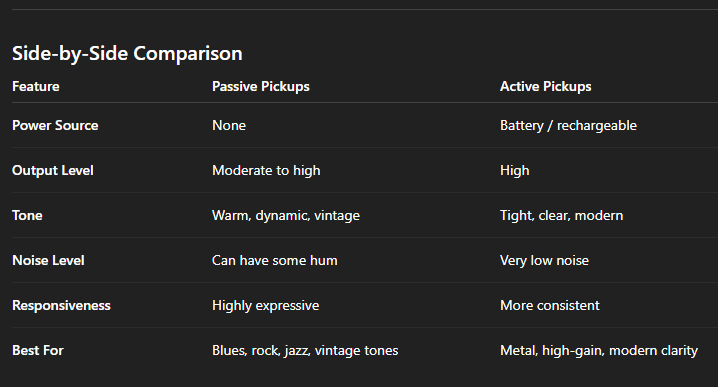
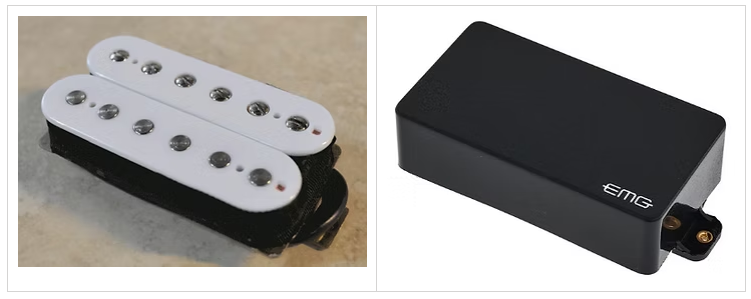
Passive pickups are the original, time-tested design used since the early days of electric guitars. They rely on magnets and coils to convert string vibration into signal—no battery required.
What They Sound Like
Warm, rich, and organic
Highly dynamic and touch-sensitive
Full of natural character and harmonic detail
Passive pickups respond directly to your hands. Your picking attack, volume knob, and pedal interaction all shape your tone in a very natural way. That responsiveness is what many players describe as “alive.”
Common Styles & Genres
Blues
Classic rock
Rock
Jazz
Vintage-inspired tones
Even metal (especially for players who want more dynamics)
What Are Active Pickups?
Active pickups include a built-in preamp powered by a battery (typically 9V or rechargeable). This onboard circuitry boosts and shapes your signal before it hits your amp.
What They Sound Like
High output and very clear
Tight low end with crisp highs
Extremely low noise
Active pickups are designed for consistency and precision. They deliver a focused, controlled tone—especially useful in high-gain situations where clarity can easily get lost.
Common Styles & Genres
Metal
Hard rock
Progressive / technical playing
Modern clean tones
Which One Should You Choose?
Go Passive if you want:
Touch-sensitive, expressive tone
Vintage or classic character
Warmth and harmonic richness
Natural interaction with pedals and amp
Go Active if you want:
Tight, aggressive high-gain tones
Maximum clarity and definition
Minimal noise and interference
A consistent, controlled signal
There’s no wrong answer here—just what fits your ears, your hands, and your rig.
Thinking About Upgrading? We Can Help.
If you’re considering a pickup swap but aren’t sure which direction to go, that’s exactly what we’re here for.
At West Valley Guitar Works, we offer:
Pickup installation and upgrades
Full wiring and electronics clean-up
Personalized recommendations based on your gear and goals
Whether you’re chasing vintage vibe or dialing in a modern metal tone, we’ll make sure your guitar delivers.
Final Thoughts
Pickups are one of the most impactful upgrades you can make—but they’re also personal. The “right” choice is the one that makes you want to keep playing.
If you get the chance, try both. Pay attention to how they feel—not just how they sound.
Let’s Dial In Your Tone
Have questions or ready to upgrade? Reach out anytime.
At West Valley Guitar Works, we’re all about helping you get the absolute best out of your instrument.
Let’s make your guitar work for you.
Passive Pickups vs. Active Pickups: Which One's Right for You?
Amp Modeling: The Pros and Cons for Today’s Guitar Player
By West Valley Guitar Works – Goodyear, AZ
Over the past decade, amp modeling has evolved from a niche studio tool into a mainstream solution used by weekend players, touring professionals, and home musicians alike.
At West Valley Guitar Works, we hear the same questions all the time:
“Should I switch to modeling?”
“Does it really sound as good as a tube amp?”
“Will it work for my setup?”
Like most things in the guitar world, the honest answer is: it depends.
And, I am biased on this topic as I have been using modelers for years now. No more amps on stage.
But, let’s break down the real-world pros and cons of amp modeling so you can decide what fits your tone, your rig, and your playing style.
What Is Amp Modeling?
Amp modeling uses digital technology to recreate the sound and behavior of traditional guitar gear—amps, speaker cabinets, microphones, and effects—all within a single system.
You’ll find modeling in:
Floor units
Rack systems
Combo amps
Software plugins and recording setups
✅ The Pros of Amp Modeling
1. Massive Range of Tones
One unit can give you access to dozens—even hundreds—of amp and cabinet combinations.
From pristine cleans to modern high-gain, everything is available without owning a room full of gear.
Great for players who:
Cover multiple genres
Play in cover bands
Record a variety of styles
2. Consistency Every Time You Play
Traditional tube amps can vary depending on temperature, tube wear, and power conditions. Modeling rigs deliver the same tone every time you power up.
That reliability is a huge advantage for both live performance and recording.
3. Portability and Simplicity
Modeling setups are typically:
Lighter
More compact
Easier to transport
No heavy cabinets. No fragile tubes. Just plug in and go.
4. Silent Practice & Direct Recording
Most modelers allow you to:
Practice with headphones
Record directly into a DAW
Play at low or apartment-friendly volumes
For home players, this alone can be a deciding factor.
5. Low Maintenance
No tube replacements. No biasing. Fewer mechanical issues overall.
Less maintenance means more time playing—and fewer unexpected repair costs.
⚠️ The Cons of Amp Modeling
1. Feel and Response Differences
Even with modern technology, some players still notice differences in:
Pick attack
Note bloom
Dynamic response
If your playing relies heavily on touch and feel, this can matter.
2. Too Many Options
With so many amps, cabs, mics, and settings available, it’s easy to fall into “option overload.”
Some players end up tweaking more than they play.
3. Learning Curve
Modeling systems can be complex. Menus, presets, signal chains, and software editors take time to understand—especially if you’re used to a simple amp-and-cable setup.
4. Digital Dependence
Firmware updates, software compatibility, and occasional glitches come with the territory.
They’re usually minor—but they don’t exist in a purely analog rig.
5. Live Setup Can Be Tricky
Modelers can sound incredible live—but only if the setup is right.
They often rely on:
Quality monitoring
A good PA system
Proper gain staging
Without these, even high-end units can underperform.
So… Is Amp Modeling Right for You?
Amp modeling isn’t better or worse—it’s just a different approach. Many players today actually use both digital and traditional rigs depending on the situation.
Modeling might be right if you:
Play a wide range of styles
Record at home
Need portability and consistency
Want a low-maintenance setup
Traditional amps might be better if you:
Prefer simplicity
Rely heavily on touch dynamics
Love the feel of air moving from a speaker
Enjoy hands-on analog gear
Final Thoughts from West Valley Guitar Works
At West Valley Guitar Works, we believe great tone starts before the signal ever hits your amp.
A properly set up guitar—dialed-in action, solid fretwork, and reliable electronics—makes a bigger difference than most players realize, whether you’re running a digital rig or a vintage tube amp.
If you’re experimenting with amp modeling, which I personally use 100 % of the time—or going back to traditional gear—we’re here to make sure your instrument performs at its absolute best.
Let’s Dial In Your Tone
📍 Goodyear, AZ
🎸 Guitar & bass setups, repairs, upgrades, and tone optimization
📞 Call or text anytime to talk gear
Your tone. Your hands. Your choice. 🎸
The Truth About “Factory Setup” on New Guitars
West Valley Guitar Works – Goodyear, AZ
You just bought a new guitar. It looks amazing, feels good in your hands… but something’s a little off.
Maybe the action feels high.
Maybe it buzzes in certain spots.
Maybe it just doesn’t play as easily as you expected.
So you start wondering:
“Isn’t this supposed to be set up already?”
Here’s the truth:
👉 Most guitars are NOT fully dialed in from the factory.
What “Factory Setup” Actually Means
When a guitar leaves the factory, it usually receives a basic, generalized setup—not a precision setup tailored to a player.
That setup is designed to:
Be safe for shipping
Work “well enough” for a wide range of players
Avoid extreme adjustments that could cause issues in transit
In other words, it’s built for survival, not perfection.
What Happens Between the Factory and You
Even if a guitar was perfectly set up at the factory (which is rare), a lot happens before it reaches your hands:
🌡️ Climate Changes
Your guitar may travel through:
Humid warehouses
Dry trucks
Temperature swings
Wood moves. Necks shift. Action changes.
Here in Arizona, the dry climate alone can dramatically affect:
Neck relief
Fretboard condition
String height
📦 Shipping & Handling
Guitars are shipped under string tension.
That can lead to:
Slight neck movement
Intonation drift
Hardware shifting
Even a small change can affect how the guitar feels.
🏬 Store Conditions
If you bought from a shop (or online warehouse), the guitar may have:
Sat on a wall for weeks or months
Been played by multiple people
Experienced further climate changes
By the time it reaches you, it’s no longer in “factory condition.”
Signs Your New Guitar Needs a Setup
A brand-new guitar can still need professional adjustment.
Watch for:
High or uncomfortable action
Fret buzz in certain areas
Tuning instability
Chords feeling harder to play than they should
Notes sounding slightly out of tune up the neck
If you’re noticing any of these, it’s not you—it’s the setup.
Why a Proper Setup Makes a Huge Difference
A professional setup takes your guitar from “good enough” to dialed in for you.
That includes:
Adjusting neck relief
Setting string height (action)
Dialing in intonation
Checking nut slot height
Fine-tuning playability across the entire neck
The result?
👉 Easier playing
👉 Better tuning stability
👉 Improved tone and consistency
Many players are shocked at how much better their guitar feels after a proper setup—even brand-new instruments.
The Biggest Myth: “It’s a New Guitar, It Should Be Perfect”
This is one of the most common misconceptions we see.
Price doesn’t change this either.
A $300 guitar and a $3,000 guitar both:
Leave the factory with a general setup
Experience the same shipping conditions
Are affected by climate the same way
The difference is potential—not final adjustment.
Final Thoughts from West Valley Guitar Works
At West Valley Guitar Works, we see it every day:
A proper setup is the single most important upgrade you can make to any guitar—new or old.
If your new guitar doesn’t feel quite right, don’t fight it. It likely just needs to be dialed in.
Let’s Get Your Guitar Playing Its Best
📍 Goodyear, AZ
🎸 Setups, repairs, upgrades, and full playability optimization
📞 Call or text anytime to talk gear
Your guitar should work for you—not against you. 🎸
714-658-8723 TEXT ME HERE
wvguitarworks@gmail.com
CONTACT
WEST VALLEY GUITAR WORKS
GOODYEAR ARIZONA 85338